The Complete Treadmill Buyer’s Guide 2026: How to Choose the Right Running Machine for Home or Commercial Use
Share
Choosing a treadmill is one of the most important decisions you will make for your home gym or commercial facility. A well-chosen machine delivers years of reliable cardio training. A poorly chosen one becomes an expensive clothes hanger. This guide covers every factor that actually matters — motor power, running deck size, incline range, build quality, cushioning, space requirements, and features — so you can select the right treadmill with confidence.
Browse the full range of new and professionally inspected second-hand treadmills at My Fitness Junction’s treadmill collection.
1. Define Your Intended Use First
Start with how the treadmill will actually be used.
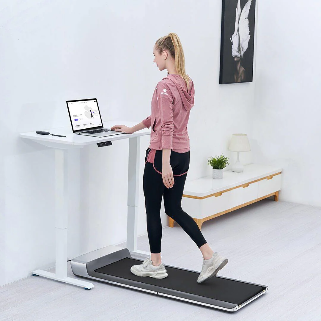
- Casual walking / under-desk use: Light daily steps while working. Look for compact folding walking pads with modest motors (around 1.0–1.5 continuous HP) and lower top speeds (6–8 km/h).
- Home jogging and mixed cardio: Regular 3–5 sessions per week including light running. A folding motorised treadmill with 2.0–3.0 continuous HP is usually sufficient.
- Serious running / HIIT / marathon training: Frequent high-intensity sessions. You need a robust continuous-duty motor (3.0 HP+), longer running deck, and higher maximum speed (16–20+ km/h).
- Commercial gym or studio: Machines that must survive multiple users every day. Only true commercial-grade treadmills with heavy-duty AC motors, commercial-grade belts, and high maximum user weights are appropriate.
Matching the machine to real usage prevents premature motor failure and belt wear.
2. Measure Your Space Accurately
Treadmills are large. Measure the available floor area and ceiling height before you look at models.
Typical footprint when in use:
- Compact walking pads / under-desk models: roughly 140–150 cm long × 50–60 cm wide.
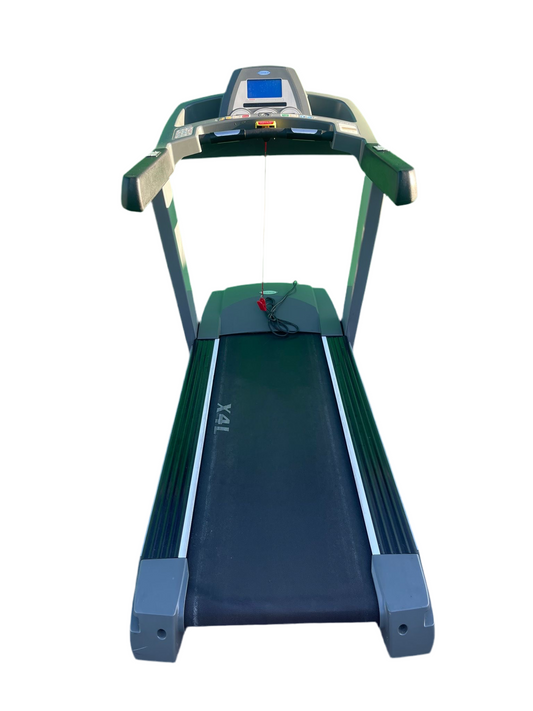
- Standard home folding treadmills: 160–180 cm long × 70–80 cm wide.
- Full commercial treadmills: 200–220 cm long × 85–95 cm wide.
Always leave at least 60–100 cm clear space behind the running belt for safety and easy step-off. Folding treadmills free up floor space when stored vertically, but they still need wall clearance when folded and are generally less rigid than non-folding commercial units.
Popular space-saving options available at My Fitness Junction include the Kingsmith Walking Pad P1 Folding Underdesk Treadmill and various WalkSlim and Reebok folding models.
3. Motor Power: Continuous Duty vs Peak Horsepower
This is the single most important technical specification.
Manufacturers often advertise “peak” or “maximum” horsepower — the highest output the motor can briefly reach. What actually matters is continuous duty horsepower (the power the motor can sustain for an entire workout without overheating).
Guidelines:
- Walking only: 1.5–2.0 continuous HP
- Jogging and light running: 2.0–2.5 continuous HP
- Regular running and interval training: 3.0+ continuous HP
- Commercial use: 4.0–5.0+ continuous HP AC motors
Heavier users (over 90–100 kg) and those who run frequently need higher continuous power. Look for AC motors on commercial machines — they run cooler and last longer under heavy loads.
Examples from the My Fitness Junction range:
- Matrix T50x-U Commercial Treadmill: 4.2 HP Club Treadmill AC motor
- Matrix T5x V3 Black Edition: 5.0 HP AC motor with Dynamic Response Drive System
4. Running Belt Size and Deck Quality
Belt dimensions determine comfort and safety, especially for taller runners.
Recommended minimums:
- Height under 5'7" (170 cm): 48–50" (122–127 cm) length for walking, 50–55" for running
- Height 5'7"–6'2": 55–60" (140–152 cm) length
- Height over 6'2": 60"+ preferred
Belt width of 20–22" (51–56 cm) is ideal for most users. Narrower belts force a restricted stride.
Deck quality and cushioning systems reduce joint impact. Commercial machines often feature multi-ply belts (2-ply minimum) and advanced cushioning such as Matrix’s Ultimate Deck system, which is designed for tens of thousands of miles of use with reduced impact.
The Matrix T50x-U, for example, offers a 60" × 20" (152 × 51 cm) running area with a 2-ply commercial belt and Ultimate Deck cushioning.
5. Incline Range and Speed
Incline turns a flat run into hill training, increasing calorie burn and reducing impact compared with simply increasing speed.
- Entry-level: 0–10% or 0–12%
- Better home and light commercial: 0–15%
- High-end commercial: often 0–15% or higher, sometimes with decline options
Speed ranges:
- Walking pads: typically 0.5–6 or 8 km/h
- Home treadmills: 0.5–16 or 18 km/h
- Commercial: frequently up to 19–24 km/h
If you train for road races or do sprint intervals, prioritise both higher top speed and a responsive incline motor.
6. Maximum User Weight and Build Quality
The stated maximum user weight is a useful durability indicator. Choose a machine rated at least 20–30 kg above your body weight. Commercial treadmills commonly support 180–200+ kg.
Key build indicators:
- Frame construction (heavy-gauge steel)
- Roller diameter (larger rollers = less belt stress; 7.5–15 cm preferred)
- Belt ply and lubrication system (many commercial belts are wax-infused or maintenance-reduced)
- Overall machine weight (heavier usually means more stable)
Cheap one-ply belts and small rollers wear out quickly under regular running.
7. Console, Heart Rate Monitoring and Workout Programes
A clear, responsive console improves the training experience.
Useful features include:
- Large, easy-to-read display showing time, distance, speed, incline, calories, and heart rate
- Quick-start and one-touch speed/incline buttons
- Contact heart-rate sensors plus wireless chest-strap compatibility
- Pre-set programes (hill, interval, heart-rate control, goal-based)
- Connectivity options (Bluetooth, USB, FitLinxx, CSAFE on commercial models)
Heart-rate control programes automatically adjust speed or incline to keep you in a target zone — useful for fat-loss or endurance sessions.
8. Folding vs Non-Folding and Under-Desk Options
Folding treadmills are practical for homes with limited space. Soft-drop or hydraulic systems make folding safer. Non-folding commercial machines offer superior stability and longevity.
Under-desk walking pads (such as the Kingsmith Walking Pad P1) fold almost flat and store under furniture. They suit sedentary office workers who want to increase daily step count without a full workout session.
9. New vs Professionally Refurbished / Second-Hand Commercial Treadmills
Brand-new premium commercial treadmills are expensive. Professionally inspected second-hand commercial machines from Matrix, Technogym, Precor and similar brands deliver the same durability at a fraction of the price, provided they have been properly serviced.
When buying used:
- Confirm continuous motor performance under load
- Inspect belt condition and roller wear
- Check incline mechanism operation
- Verify warranty or return period
- Prefer sellers who source from maintained gym environments and offer testing
My Fitness Junction specialises in this category. Machines such as the Matrix Fitness Commercial T50x-U, Matrix T3X, Matrix T5x V3 Black Edition, and Technogym models are inspected for motor performance, belt condition and safety before dispatch.
10. Additional Practical Considerations
- Noise: Quieter motors and better deck systems matter in apartments or shared homes.
- Power requirements: Many commercial treadmills need a dedicated 16A socket.
- Maintenance: Even “maintenance-free” belts benefit from occasional cleaning and lubrication checks. Follow the manufacturer schedule.
- Delivery and installation: Confirm the seller offers UK-wide delivery and optional assembly — especially important for heavy commercial units.
- Warranty: Look for clear parts-and-labour cover. Used machines should still carry a meaningful guarantee.
Quick Decision Framework
| Use Case | Recommended Specs | Example Models at My Fitness Junction |
|---|---|---|
| Under-desk walking | Compact, low speed, folds flat | Kingsmith Walking Pad P1, WalkSlim models |
| Home mixed cardio | Folding, 2–3 HP, 15–18 km/h, 0–12/15% | Reebok, BodyPower, Dynamix folding treadmills |
| Serious home running | Strong continuous HP, longer deck | Higher-spec folding or light commercial |
| Small gym / studio | 4+ HP AC motor, commercial belt, 180+ kg | Matrix T50x-U, Matrix T3X |
| High-volume commercial | 5 HP class, heavy frame, advanced console | Matrix T5x series, Technogym commercial |
Final Recommendation
Decide your primary use, measure your space, prioritise continuous motor power and running-deck dimensions, then check build quality and maximum user weight. Features and programmes are secondary once the mechanical foundation is correct.
Whether you need a compact walking pad for the home office or a commercial-grade Matrix treadmill for a busy facility, you will find suitable options — both new and carefully inspected second-hand — in the My Fitness Junction treadmill collection. Every machine is selected for real-world performance and durability, with UK delivery and optional installation available.
Select the treadmill that matches your actual training demands rather than the highest marketing numbers, and it will serve you reliably for years.